



What a Metallographic Inlay Machine Does
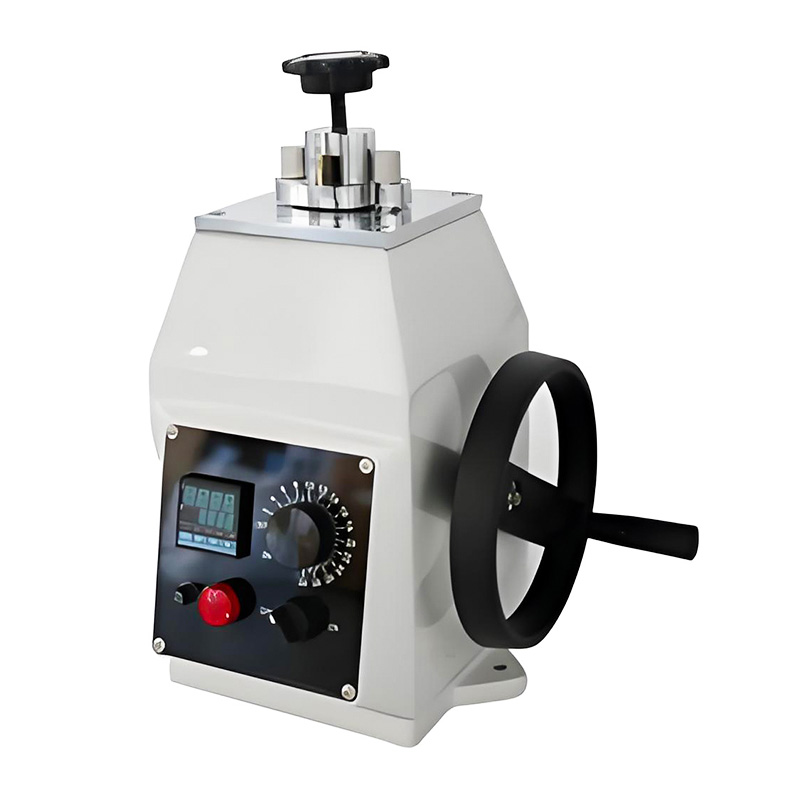
A metallographic inlay machine, also called a mounting press, embeds a metal or material sample in resin to create a rigid, handle-friendly puck that can be ground, polished, and examined under a microscope. Loose or irregularly shaped samples — thin sections, powders, small fasteners, wires — can't be polished reliably on their own; mounting gives them a uniform, flat surface to work from.
The process applies heat and pressure to a thermosetting or thermoplastic resin around the sample inside a cylindrical mold. Once cured, the mount protects delicate edges during grinding and gives lab technicians a consistent puck size that fits standard polishing equipment.
Hot Compression Mounting vs. Cold Mounting
Inlay machines specifically refer to hot compression mounting equipment. It's worth understanding how this compares to cold mounting, since sample type often dictates which method is appropriate.
| Factor | Hot Compression (Inlay Machine) | Cold Mounting |
|---|---|---|
| Cycle time | 5-15 minutes per mount | 15-30 minutes curing at room temp |
| Edge retention | Excellent, minimal shrinkage | Good, depends on resin type |
| Heat-sensitive samples | Not suitable (temp reaches 150-180°C) | Preferred choice |
| Throughput for QC labs | High, repeatable batch cycles | Lower, limited by cure time |
Key Components and the Press Cycle
- Mounting cylinder and mold: Holds the sample and resin, typically available in diameters from 25mm to 50mm depending on sample size.
- Heating element: Ring or block heaters bring the mold to curing temperature, usually 150-180°C depending on resin type.
- Hydraulic or pneumatic press: Applies consistent pressure (commonly 20-30 MPa) to compact the resin around the sample and eliminate voids.
- Water cooling circuit: Rapidly cools the mount after curing so it can be ejected without deforming.
A typical cycle runs through four stages: sample placement and resin loading, heating and pressurization, a hold phase at peak temperature and pressure, then forced cooling before the mount is ejected.
Choosing a Mounting Resin
Resin choice affects both how well the sample edge is preserved and how the mount behaves under grinding. The most common types used with inlay machines:
- Phenolic resin: Low cost, hard, and widely used for routine metallographic samples where edge retention isn't critical.
- Diallyl phthalate (DAP): Higher hardness and better chemical resistance, suited to samples requiring etching in aggressive reagents.
- Epoxy-based hot mounting resin: Minimal shrinkage and strong edge retention, often chosen for coated samples or plated surfaces where edge accuracy matters.
- Conductive resin (copper or carbon filled): Used when the mounted sample will be examined under SEM, since it eliminates the need for separate conductive coating.
Common Applications in Materials Analysis
- Failure analysis: Mounting fractured components to examine grain structure and crack propagation paths.
- Coating thickness inspection: Cross-sectioning plated or coated parts to measure layer thickness under a microscope.
- Weld inspection: Mounting weld cross-sections to evaluate penetration depth, heat-affected zone, and porosity.
- Incoming material QC: Routine mounting of raw material samples to verify grain size and heat treatment consistency against spec.
Matching Machine Capacity to Lab Volume
Single-station benchtop presses suit labs running occasional samples, while dual or multi-station units let technicians prep one mount while another cures, roughly doubling throughput without doubling floor space. For high-volume QC environments, automated units with programmable cycle memory reduce operator variation between batches — a meaningful factor when mount consistency feeds directly into measurement repeatability.
Setting Pressure, Temperature, and Cycle Time
Parameters need to be tuned to both the resin and the sample material, not run on default settings across the board:
- Soft or porous samples generally need lower pressure to avoid deformation, while dense metal samples can tolerate the full rated press force.
- Extending hold time at peak temperature improves resin flow around fine surface features but adds to total cycle time — a tradeoff worth testing per sample type.
- Cooling too quickly under pressure can introduce internal stress in the mount, leading to cracking during storage or later grinding.
Selecting a Reliable Equipment Supplier
A few practical checks help separate durable lab equipment from machines that will need frequent servicing:
- Confirm the heating element's temperature uniformity across the mold, since hot spots cause uneven curing and mount defects.
- Check pressure gauge calibration documentation and whether the press force is field-adjustable or fixed.
- Ask about mold cylinder availability in multiple diameters, since switching sizes shouldn't require a full machine swap.
- Verify what spare parts (heating elements, seals, cooling components) are stocked locally versus requiring factory lead time.

